I wrote an article for East Anglia Bylines about the recent regional elections in Germany and their significance for German national politics and the UK.
-
I wrote an article for East Anglia Bylines about the collective CONVERGE’s first major event in Norwich:
-
I wrote an article for East Anglia Bylines about a temporary installation by the Berlin theatre Volksbühne.
-
The second episode of my podcast series “Differently” has just been published. Stitched together from conversations with sociologists and fathers who have taken parental leave, it tells the story of how parental attitudes have shifted over the last 30 years in Japan.
Head here to have a listen!

-
Just over a week ago, I published the first episode of my new podcast series. The episode is built around a series of conversations with a couple who live in Kyiv and who decided to have a child in 2023 despite Russia’s war of aggression. They are also trying to equal parent, and during our conversations we talk about the challenges of equal parenting – and the rewards.
Head oder to this page to have a listen!

-
I’m excited to announce that the trailer for my new podcast series Differently is now out.
Head over to this page to have a listen!

-
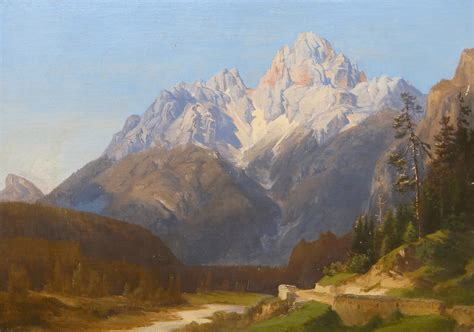
Over the last two months, the term “Alpine Divorce” has emerged in social media to denote situations where (predominantly) men leave (predominantly) women behind during mountaineering expeditions.
The beginning of this trend can be traced to an Austrian court case from February. The court made headlines around the world when it convicted an amateur mountaineer of gross negligence manslaughter for leaving his girlfriend behind whilst descending from the peak of Austria’s tallest mountain, the Grossglockner, causing her to freeze to death.
During the descent, the man told the police over the phone that they didn’t need any help, even though they had been offered to be rescued by helicopter. And when he left his girlfriend behind to go and get help, he didn’t wrap her in an emergency blanket, a fact that the judge found contributed to her death.
During the trial, the man’s ex-girlfriend also testified that a similar thing had happened to her whilst they were together. In his defence, the man apologised profusely for his actions, but pleaded not guilty. In his verdict, the judge suspended the man to five months suspended sentence.
How german-speaking countries are talking about it
The case has triggered a debate in the German-speaking media – perhaps unsurprising given how rare it is for mountaineering incidents to make it all the way to prosecution. Whilst the Austrian case shows how tragic this behaviour can be, in most cases the consequences are not fatal – but they are still part of a pattern of domination where men let their desire to achieve certain things, be it scaling a peak or simply seeking a thrill, lead them to neglect the capabilities of those they are out and about with.
One focus of the debate has been the extent to which gender roles can explain this behaviour. In an interview with the SZ, the German Alpine Club (DAV) noted that there were no studies that showed that men systematically left womin behind on mountaineering expeditions. However, the spokesman stated that the wave of comments from women on social media should be taken seriously, and said the DAV was currently assessing whether it was necessary to conduct further investigations.
Others argue that problematic aspects of masculinity are clearly to blame for a practice that has lead to such large numbers of women reporting on being subjected to this behaviour, and barely any men.
UK men: no Alps, no problem?
The UK’s geography doesn’t boast the same kinds of peaks that the Alps do. But that’s not to say that these behavioural patterns aren’t to be found here, too. Be it cycling, hiking or swimming – even if it’s not fatal, a chauvinistic focus on one’s own physical limits and prioritising of one’s own enjoyment can lead to injury or exhaustion on the part of those less physically capable. As the conversations on social media show, it is overwhelmingly women who report that they have been subjected to this behaviour.
Of course, chauvinism and the side of masculinity that seeks confirmation through physical achievement is apparent in all sporting practices. The “problem”, so to speak, is that it rarely manifests in a way that is prosecutable. And whilst it is surely the case that it is extreme sports like alpine mountaineering or sailing that are likely to see situations where this bevahiour leads to fatalities, there is a lesson here for men engaging in all kinds of sport together with women.
Limits of a term
The term “alpine divorce” actually derives from a short story by a Scottish-Canadian author in which a man takes his wife to the Alps with the intention of pushing her down a ravine. The contemporary meaning clearly has far more to do with structural inequality and unintentional oppression, but the term has certainly hit a nerve. Whilst the directness and novelty of the term “alpine divorce” have helped the phenomenon achieve visibility in the hashtag economy of social media, it doesn’t quite do the practice justice.
Firstly, the non-intentional nature of this chauvinistic behaviour is not captured in the term. The Guardian reported on the phenomenon and featured an interview with Julia Ellison, the first female editor-in-chief of Climbign magazine. She emphasised the casualness of how some of thse situations can emerge: “There’s that male ego element to it that’s not necessarily evil or ill-intentioned, but it usually has a negative effect on the partner who’s being left behind.”
Secondly, there is an implication that men are always stronger and are in a position to leave women behind which has been criticised by some observers in the debate.
However, its limitations nonewithstanding, it is clear that this case, and the term “alpine divorce” which has sprung up along with it, have identified a behavioural practice that needs further analysis.
-
I wrote an article for East Anglia Bylines about the upcoming Community Gardens Festival in Norwich.
-
I wrote an article for East Anglia Bylines on my experiences attending two workshops as part of Norwich Theatre’s Fatherhood series.
-
A shorter version of the article below appeared in East Anglia Bylines on 14th November 2025:

